

Dear readers, here my my practical, step-by-step guide to Hotel or Restaurant job interview preparation where you will get all my tips and tricks on researching the employer, dressing right, what to bring and calming your nerves in the last few minutes before you’re called in. This note is taken from my Hotel & Restaurant Job Guide. Download the guide from here: https://hospitality-school.com/training-manuals/get-job-hotel-restaurant-cruise/. Inside this guide you will get everything you need to know to land on your desire hotel or restaurant job. Don’t miss it. Download now.

Preparing for a Hotel or Restaurant Job Interview
Hospitality pays and that’s the plain reason so many students point themselves at it. A management graduate can start a career in a hotel, a restaurant, a motel, a resort, or on a cruise line and inside each one there’s more than one way in. What the industry won’t do is hand a job to someone who turns up hoping. For example, in the United States alone, hotel industry directly employ around 2.2 million people. The industry is on pace to add over 30,000 more jobs this year.
Almost everything that decides an interview happens before you walk into the room. Prepare properly and you give yourself the best chance you’re going to get. Here’s the work.

Research the employer
Do this first and do it seriously, because the rest of your preparation depends on it. Confidence is the first return. It’s hard to be frightened of a conversation when you already know what the other side does for a living. You’ll have something to say instead of only something to answer and interviewers are noticeably warmer toward the candidate who came in knowing about the place than toward the ones who didn’t bother.
Research also saves you from the question that makes most candidates sweat. What salary do you expect? Guess low and you’ve undersold yourself. Guess high and it’s obvious you never checked. If you’ve done the reading, you can name a range that fits what this employer actually pays and you can name it without flinching. There are some free tools for example, Glassdoor and Payscale will show you that range for a specific job title and location before you ever sit down. Research also lets you line your own skills, knowledge and ability up against what the job really calls for, which happens to be the exact comparison the interviewer is running while you talk.
Where to look:
- The employer’s own website. Almost every hotel, restaurant, resort and cruise line runs one and it’s the primary record of what the company says about itself. Start here.
- Brochures and newsletters. If you’re applying through a recruitment firm, an agency, or a job fair, ask them for whatever the employer has published. They usually have something.
- Your placement office. Schools, colleges and universities keep material on employers who hire from them. Ask your teachers too, since they often know more than you’d guess.
- Social networks. Searched properly, they’ll frequently turn up somebody who works there, used to work there, or at least knows the place at second hand. LinkedIn is the one worth starting with. You should search the employer’s page and see who is actually working there before even you apply.
Once in a while there’s nothing to find. A very small or very new employer may have no website, no brochure, no trace worth chasing. In that case, go to the office and talk to them in person. But go as a prospective business client, not as a candidate. Announce that you’re there about a job and they’ll close up and you’ll leave with nothing.
While you’re at it, find out what kind of interview this actually is. There are some restaurants those run a working interview. Working interview is a short trial shift where they watch, for example, how you treat the kitchen staff, not just what you say during the interview. Cruise lines especially often start with a one-way video interview instead of a phone call.
Rehearse
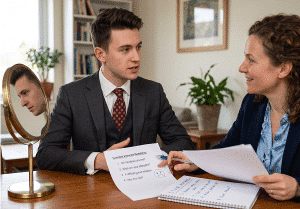 The best players in the world still practice. So do the best singers and the best actors. You are not above a rehearsal. Ask a friend or someone in your family to put you through a mock interview. Hand them a list of the questions that come up most often and let them work through it. Do it more than once. For the harder questions: those are the ones that ask about a time a guest was upset. To tackle such questions, structure your answer based on Situation, Task, Action, Result, so the story doesn’t wander once you’re saying it out loud instead of thinking it.
On your own, use a mirror. Say your answers out loud. Loud enough that you can hear your own voice. Then watch yourself while you do it, because the mirror shows you what you can’t feel: your posture, your gestures, the face you make when you’re nervous. Whatever it shows you can be corrected and correcting it costs nothing but practice.
Dress
 Whatever you put on speaks for you before you open your mouth. You want to look professional and if you’re going to err, err toward overdressed. Nobody ever lost a job for looking too serious about it.
Choose your clothes the day before. Not the morning of. The day before. Last-minute clothing disasters only happen to people who left it until the last minute. Check that everything is clean, unstained, unwrinkled and properly ironed. Polish your shoes until they shine. Then take the same care with yourself: hair cut, styled decently, fingernails clean and trimmed.
| Ideal Business Dress, Men | Ideal Business Dress, Women |
| Suit, black or gray | Suit in black or gray, or a shirt worn with a coat |
| Full-sleeve shirt, preferably a dark color | Stockings |
| Conservative tie, matching the suit and the shirt | Dress shoes |
| Belt that matches the outfit, plain rather than fancy | Light jewelry |
| Dark socks, black preferred | |
| Dress shoes, black or a color that works with the suit |
What to bring
A small briefcase, a bag, or even a slim file will do, so long as you can carry it without looking like you’re moving house. Pack it the night before:
- Several copies of your resume
- Your original certificates, if they’ll be wanted
- A list of references
- Your letters of recommendation
- A business card, if you have one
- A pen and check that it actually writes
- Your research notes, for a last read in the waiting room
- A comb and makeup if you use it
Are you upset that you don’t have references or a recommendation letter yet? A professor, an internship supervisor or whoever ran a campus hospitality event you worked can stand in for both. Come on, nobody’s first job search comes with a paper trail and interviewers know that don’t worry much. There’s nearly always a stretch of waiting before the interviewer appears. That’s what the notes are for.
Questions you should ask
An interview isn’t a one-sided game and you shouldn’t play it like one. Your turn will come. Some interviewers will invite you outright to ask whatever you like. Others will simply leave a pause near the end and watch what you do with it. Take the pause.
Don’t worry that a question will disturb the interviewer. It won’t. A relevant question does two jobs at once. It shows you want the work and it shows you looked into the organization before you came. Both of those land well.
- What would my first assignment be, if I’m selected?
- What would my major responsibilities be?
- What specific skills and abilities are you looking for in this post?
- Is there any training available?
- What is the working environment here like?
- If I show real skill, is there an opportunity for promotion?
- What are the organization’s goals and objectives?
- What are the biggest challenges of this job?
- What do you like most about working here?
- How will I hear the result?
That last one matters more than it looks. Ask it before you leave and you won’t spend the following week guessing.
The morning of the interview
Read a newspaper. Watch the news. Some interviewers like to open with whatever happened that day and if you can hold up your end of that conversation, you’ve started well. If you can’t, you’ve started by saying you don’t know. Then check your bag and check it again. This is the hour when nerves run highest and memory runs worst and it’s exactly the hour when people leave the folder on the table and don’t find out until they need it. The final check takes a few minutes. Take them.
Then leave and leave early. Leave early even if the venue is a short walk from your house. If you’ve never been there, or it’s across the city, or you’re unsure of the route, give yourself far more time than the trip should take. Arriving very early costs you nothing but time. Arriving one minute late can cost you the job. That’s the whole calculation and it isn’t close.
If you don’t know the address, call the organization and ask for the most convenient way to get there from where you live. They make that trip every day. They’ll give you a better answer than a map will.
When you arrive
Introduce yourself to the receptionist and ask what happens next. You may be handed a form to fill in, or asked to sign beside your name. Whatever you’re asked to do, do it and do it pleasantly. Find out the names and designations of the people who’ll be interviewing you. Write them down if you need to. You’ll want them afterward, because a thank-you letter follows the interview and it has to reach the right person under the right title.
If you have time in hand, find the restroom and check yourself once more. Hair. Clothes. Tie. The person who calls your name should see somebody who looks decent and professional and confirming that takes almost no time at all.
The last few minutes
You’ll be nervous. Nearly everybody is nervous in the minutes before an interview and there’s nothing wrong with you for feeling it, so don’t stack guilt on top of the nerves. You have enough to carry.
Try to settle. The interviewer isn’t an alien. He or she is a person with a job to do and that job is to find somebody good, which is a job you can help with. If other candidates are waiting alongside you, talk to them. A few minutes of ordinary conversation does more for nerves than sitting in silence rehearsing your own disaster. Remembering something that once went well for you does the same. Look over your research notes again if the wait is long, but don’t cram and don’t pile pressure on yourself. Expect nothing in particular. Stay cheerful. Take the interview as it comes.
Just before they call you in, drink a glass of water. Then breathe. Long, slow, deep breaths, repeated for a while. That isn’t superstition. Slow breathing is a recognized method for bringing anxiety down and it works if you actually do it. The mechanism is simple: slow and deep breaths activate the parasympathetic nervous system. It is the body’s own brake pedal, which lowers your heart rate before they call your name. If you believe in God, say his name and go in.
One last thing and it’s the one people forget. Switch off your phone. Switch it off, or at the very least set it to silent and handle it before you reach the venue rather than in the corridor outside the door. A phone ringing in the middle of your interview is the worst thing that can happen in that room and under pressure this is precisely the step that slips. Hiring-manager surveys have flagged this for many years. A phone interruption consistently ranks among the most damaging mistakes a candidate can make. Deal with it early.
Then walk in. You’ve done the work.
Quick reference
| When | What |
| The day before | Choose your clothes and iron them. Polish your shoes. Pack the bag. Run one more mock interview. |
| The morning of | Read a newspaper and watch the news. Re-check the bag. Leave far earlier than you think you need to. |
| On arrival | Introduce yourself at reception. Get the interviewers’ names and titles. Check your grooming in the restroom. |
| The last few minutes | A glass of wate |
