

Foodservice managers can’t just hire random people and hope for the best. They’ve got to build a culture and workplaces where foodservice staffs actually want to make guests happy and satisfied. Every employee should be trained in a way to keep guests at the center of each decision. Staffs should prioritize guest’s comfort first, welcome them, anticipate what they want before they ask, respond without hesitation and make them feel valued from arrival through departure. Just by anticipating guest needs, food servers or waiters can serve them in the most efficient, professional and effective way possible.
A 2025 Zendesk study found 56% of unhappy customers never complain. They simply walk away. Management does not get the chance to fix anything. Multiple bad experiences? 73% percent will bolt to a rival. Even 2 negative visits can trigger brand abandonment. The math is not kind. The horrible part is that guests give restaurants roughly 2.2 chances before they are gone for good.
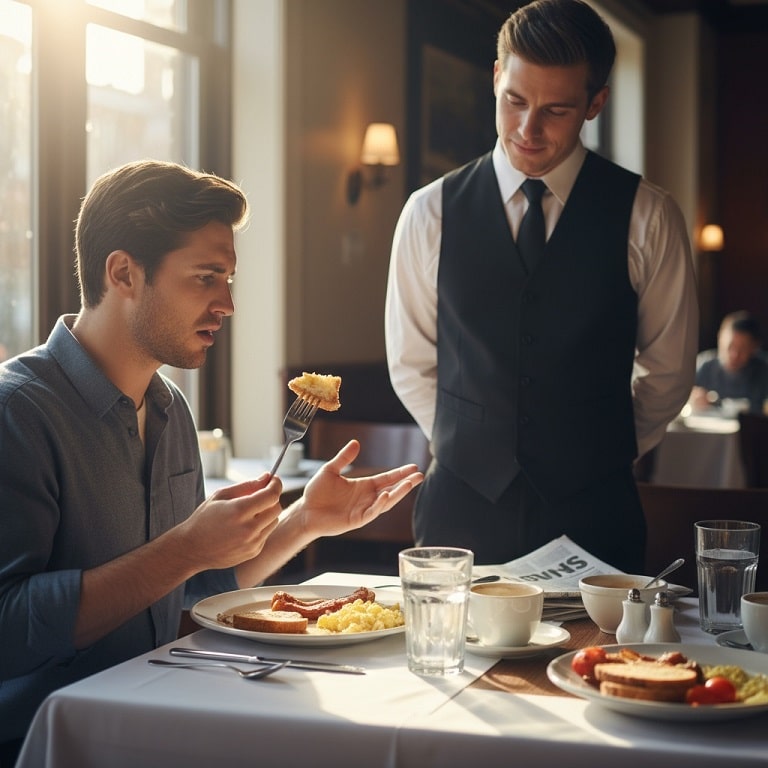 Food and Beverage Servers must avoid following specific behaviors to prevent service problems:
- Never ignore customers.
- Don’t rush those who want to linger.
- Avoid keeping customers waiting without proper acknowledgment or reasoning.
- Explanations matter.
- Don’t serve substandard items.
- Never allow guests to sit at dirty tables.
- Eliminate dirty conditions.
- Ban unsanitary practices.
- Behave politely to customers always.
- Indifference damages relationships.
- Rudeness destroys them.
Managing Guest Complaints
To resolve a guest complaint, the server should determine what the issue is, correct it if possible, and show the guest that the operation takes the complaint seriously. You should exhibit a real desire to resolve the matter. Management should be grateful to bring the matter to their attention and then follow through all the time. This professional and prompt approach will generally satisfy most customers. Also as a part of food service operation, genuinely apologize for any inconvenience. Seriousness, concern, and a visible effort to correct the problem usually resolve any situation.
Turning Complaints Into Assets
Some guests complain because they’re trying to help. They flag something that might bother others and bring it to management’s attention. These complaints tend to arrive calmly, with a friendly tone and constructive intent.
Management express gratitude, promise to handle it, and then follow through.
Never view a complaint as an attack on staff. Don’t see it as criticism of operations management. Complaints help improve business. Managers often learn about problems only from customers. Attracting new guests isn’t easy, so losing existing ones is foolish and wastes resources. Receiving a complaint beats having dissatisfied guests leave forever. They won’t return. Accepting the complaint gives you a chance to fix issues. The silent guest creates hazards for profitable business. Unhappy guests who vanish discourage others from visiting. Word of mouth can be your best marketing tool or your worst enemy. Academic research backs this up. One study found excessive wait times slash revenue by 15%. Real money walks out the door. Another survey revealed 26% of diners feel rushed during meals. They are not enjoying themselves – they watch the clock. Such time pressure creates resentment in restaurant business. When reservation tables are not ready, frustration spikes fast among guests.
Consider these 8 frequent complaints from foodservice customers:
- Delayed and unpredictable service delivery that disturbs the overall guest experience.
- Food and beverage that falls short in quality and is served at wrong temperatures.
- Lapses in cleanliness and poorly maintained dining areas.
- Unfriendly and unapproachable Staff and their lack of sufficient product expertise.
- Lengthy delays in being seated, served or even receiving the bill.
- Uncleaned Service ware, utensils, and equipment that do not meet proper cleanliness standards.
- A lack of distinctive atmosphere and uninspiring, boring interior decoration.
- Challenges related to parking facility, venue accessibility, and location convenience.
When you are dealing with angry guests in hotel or restaurant:
- Avoid defensiveness.
- Never assign blame.
- Don’t promise what you can’t deliver.
- Never leave phone callers on hold.
- Always explain properly when you have to refuse a request.
Taking proper action to deal with guest complaints
Nobody enjoys confronting an irate patron. Train servers to remain composed. Stay detached from negative emotions. Maintain professionalism. The rule of receiving a guest complaint is simple: first listen properly then accept responsibility when warranted and solve the issue if it is within your capacity.
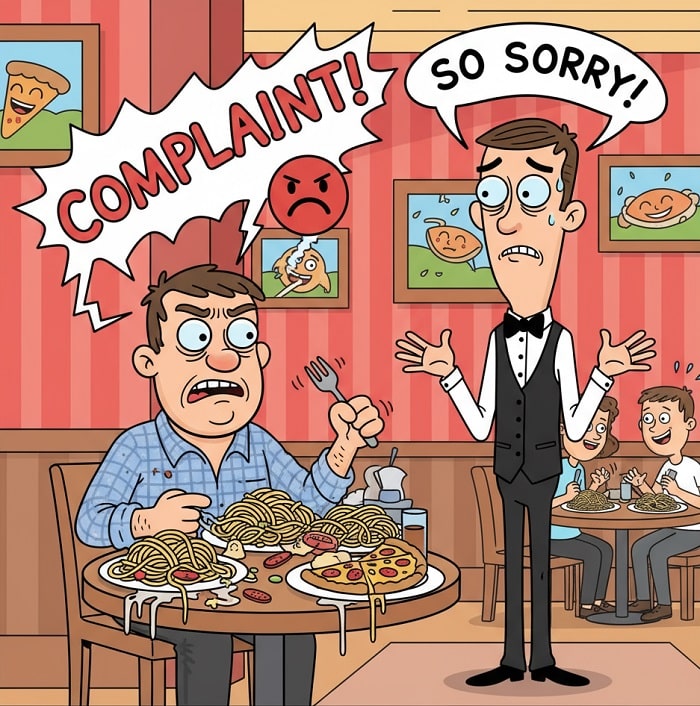 Start by listening. Identify the real cause. Don’t offer excuses like being short-staffed or food shortage. Calmness yields clues for resolution. Ask questions until your get full clarity. Restate the issue to confirm understanding. This will confirm you grasp the complaint correctly.
The guest needs to know you understand his problem properly. So each guest deserve to be heard fully and attentively. Let them voice their concerns.
Allowing them to speak might make them feel better and ease their frustrations. They might realize what angered them isn’t as critical as they thought initially. Look at the situation from their standpoint. Try to understand their perspective. Don’t become defensive or take it personally or feel attacked. Face the problem together. Ask for suggestions on how to solve it. Work toward a mutually acceptable solution. Apologize for causing any trouble. All these things really matter.
Never let a dissatisfied or difficult guest walk out angry. If you can’t solve it, find someone who can. Giving something to an unhappy guest – may be a free item, a free meal- all these are almost always worth it. That’s an investment in future business. Guests who become abusive require different handling.
Violence demands escalation. If a guest becomes abusive or violent, call management, security or the police. Avoid physical confrontation at all costs. Log every complaint. There are some patterns that individual managers should identify like cold appetizers on Friday nights, slow dessert delivery after 9 PM etc. These become visible only through systematic analysis. You should be able to track problem areas. Prevent similar issues down the line. It’s also the fact that some customers complain just to score freebies. You can either accept it as goodwill or refuse. The first option I mean acceptance is recommended.
Why Guest Complaints Happen in Hotel & Restaurant
Reasons for complaints vary widely. Every complaint feels legitimate to the person making it. Complaints can actually help managers improve operations. Some criticism stems from a guest’s temporary disposition. Mood swings or poor health can trigger complaints. Unrelated stress factors play a role too. If their workday went poorly or if the guest argued with someone earlier then minor errors appear larger. Management should ensure that servers are trained to understand all these and know how to professionally handle complaints and feedbacks.
Blood sugar drops create physiological stress that colors perception of service quality. A 10-minute wait feels tolerable when guests arrive relaxed. That same wait becomes unbearable when they’re already hungry and stressed. Offer bread or complimentary appetizers during unexpected delays. This simple intervention can defuse mounting frustration.
Emotions are linked deeply with eating. As infants, we cry when hungry, in pain or distressed. Receiving a bottle soothes us, right? We link food to comfort. This happens automatically. The bond becomes permanent. This psychological connection persists into adulthood. When thorough investigation reveals nothing wrong with the food or service, remember this emotional tie. Soothe the guest’s feelings. Sometimes the kitchen can modify the dish slightly-reheating, replating or adding fresh garnish-before returning it. Stay patient, tolerant, tactful and professional in difficult situations.
How to identify an unhappy guest
Watch your tables closely. Note the patron’s mood. If someone looks irritated, avoids eye contact, or seems unhappy, ask if everything is all right.
If a guest sits without eating or drinking after service, ask the same question.
A half-hearted “OK” signals a potential problem. If they check their menu items and stop eating, or look around without consuming anything, ask what’s wrong. A clear warning sign is when someone eats or drinks very little and suddenly requests the check. This signals trouble and demands your sincere attention.
How to prevent guest complaints
In order to stop or reduce complaints, a restaurant has to maintain highest level of service standards. Complaints will drop naturally. Quality controls outcomes. Waiters or servers must take orders carefully. They should maintain proper communication thoroughly with guests. Explain things. As a server when you know that preparation time is quite long then must inform the guest. Share that information upfront. Remember this: guests want explanations, not excuses. Give them facts and provide context. Always be honest.
Some guests signal difficulty right at the start. Experienced and sharp servers sense this and take extra care. The server who gets the fewest complaints is the one who understands people and knows how to serve them best. They can read the guest. Training programs boost service performance significantly. Restaurants investing in continuous staff development report 31% higher customer satisfaction scores. Employee confidence reduces errors before they reach guests.
Kitchen actions sometimes cause guest complaints or dissatisfaction. The server should bring it to the kitchen’s attention immediately. Address it directly. Servers should try to correct mistakes before returning to the guest’s table. Fix it backstage. Present the solution to the guest.
Managers should be informed all the time
Inform management of all complaints. Do this even when they’ve been handled properly. A manager should be called for difficult situations. Corrective action must be taken to prevent same mistake happen again and again. Stop patterns from developing. Let’s say you’re getting complaints about cold food. Management needs to investigate right away. Correct whatever’s causing it. Here’s an example. Food gets plated and sits on the pickup counter. It’s just sitting there cooling off. Why is that happening? Find out. Track how long dishes wait before servers grab them. Not the servers’ fault? Then your next step will be to fix your equipment. Buy a heat lamp designed for counters. Mount it over the pickup station. Food will0 stay hot then and there will be no more complaints and problem solved. Simple, right?
When managers apologize, guests respond well. Make it standard practice. It costs nothing. Owning the mistake and just simply saying, “We are sorry sir” is always the right call. Also servers should never blame other staff members. Don’t throw colleagues under the bus. Managers should follow up on critical problems. Ensure they don’t reoccur. Stay observant.
Serving guests with special requirements
As a professional server, you must know how to accommodate guests with special needs.
Physical Disabilities
Guests arrive with different mobility needs. A guest with a physical disability might use crutches. They might need a cane. A walker helps some. Others use wheelchairs. Normally, party members will help the guest to their seat. The server’s job is often simple. Just take the walking aid. Store it in a safe place. Recent regulations and industry research emphasize the growing importance of creating inclusive dining environments, prompting many establishments to integrate accessible design features and focused staff training to better serve guests with disabilities.
Sometimes greeting guests at the door and escorting them to a host proves useful.
Store crutches and canes near the table, but out of the way. Store crutches and canes near the guest’s table. Don’t put them in the way. Avoid placing them directly under the table as well. Armchairs are helpful. Those help people push themselves up and down. Bring walking aids quickly when the guest is ready to leave.
Wheelchair guests? Often you’ll just pull out the table chair so they can roll up. If they ask for it, provide assistance moving from their wheelchair to the seat. Then, keep the wheelchair out of the way. Some people prefer to stay in their wheelchairs. Just remove the regular chair. This creates the space they need.
Guests with arm or hand disabilities need different accommodations. Certain medical conditions mean some people can only manage a spoon. Use tumblers instead of stemmed glasses. They won’t tip over as easily. Offer straws when they help. Serve hot drinks in deep cups to prevent spills if someone’s hands shake. Some guests bring their own adaptive utensils designed specifically for their needs.
When assisting with transfers, let them guide the process – they know what works. Store mobility aids where they’re accessible but won’t block traffic flow. Don’t assume every wheelchair user wants to switch seats. If hot beverages are tricky, consider serving them slightly cooler than normal. Watch for signs about additional accommodations they might need but haven’t mentioned yet.
Communication Challenges
Pay close attention to guests who might communicate in an unconventional way. They may nod. They could point at an item to show they understand. Keep a small pad handy. Write down questions. Ask something like, “How would you like your steak cooked?” Sometimes their dining companions will order for them – problem solved.
Hearing loss doesn’t mean communication breakdown. Face the guest directly. Speak clearly, not louder. Most can lip-read or follow your words when they see your mouth. Confirm orders by pointing at menu items or repeating what you heard back to them.
You might struggle to catch every word from guests with speech impairments. Try this: “Did I get that right – you want the salmon?” and rephrase gently. This confirms the order. Never rush them or finish their sentences. That’s embarrassing, and it shows. Keep your tone respectful. Ask questions courteously. Be sensitive. Be patient. Be kind.
Language barriers happen constantly in restaurants. Someone on your team might speak their language – ask around. Otherwise, body language does heavy lifting. Point at menu pictures. Nod for yes, shake for no. If they can read English better than speak it, let them tap menu items with their finger. Visual menus with photos are gold here. Hand gestures bridge gaps faster than struggling through broken phrases. Make things super comfortable as much as you can. Don’t make things over complicated.
Serving a Sight-Impaired Guest
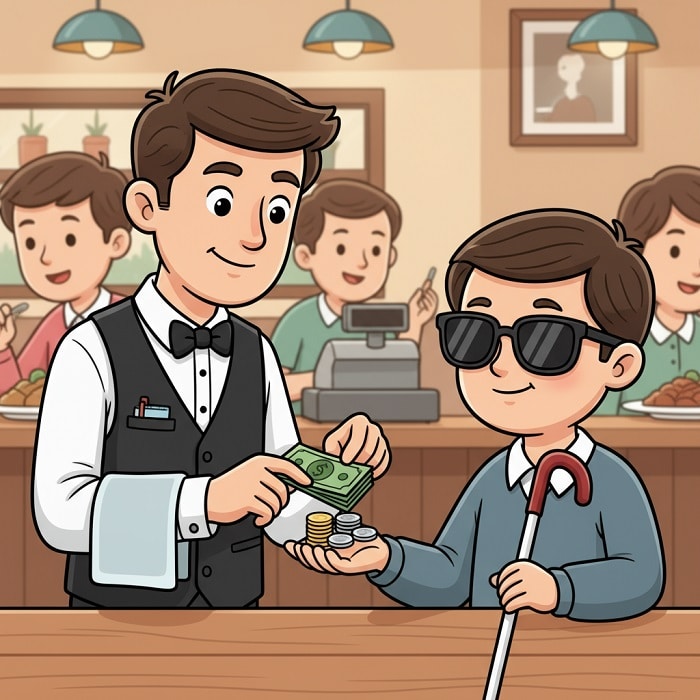 When serving a vision impairment guest, announce your presence. Make yourself known. Your guests need to know you are there. Offer to walk them to their seat. Many sight-impaired guests appreciate an arm to hold, but let them tell you what they prefer. At the seat, pull the chair out and guide their hand to the backrest so they know exactly where it is. Obviously, some guests need more help positioning themselves. Provide proper guidance if necessary.
ADA guidelines set clear standards in this regard:
- At least 5% of tables must accommodate wheelchair users-or one table minimum for venues with fewer than 20 tables.
- Table height should range between 28 and 34 inches.
- Knee clearance underneath requires 27 inches of height, 30 inches of width, and 19 inches of depth.
- Aisles need to measure 36 inches wide minimum.
These are not suggestions. Federal law mandates them. Restaurants classified as “public accommodations” under Title III must provide equal access. Compliance protects the business and serves roughly 19% of Americans living with disabilities.
Present the check to a visually impaired guest with great care. When presenting the check, describe what you’re handing them: “Here’s your receipt, it’s folded once, total’s on top.” These small steps make checkout feel normal instead of awkward. Clearly state the total amount. Go through each item and its price. Mention the total again before someone signs a credit card slip. You might need to guide their hand to the signature line.
Privacy matters here more than people think. Blind customers shouldn’t have to announce their PIN in front of the whole table or ask strangers to swipe their card. If the terminal’s inaccessible, bring a portable one or process the payment away from the table. Some guests carry tactile markers they stick on keypads – don’t remove those. Touchscreen-only systems create real problems. Always offer a backup method.
Cash payments need extra care too. Paying cash means calling out each bill and coin. “That’s a twenty, one five, three singles, and two quarters.” Count it into their palm slowly – don’t just drop it in a pile. Let them verify the count themselves if they want to.
Conclusion
Service is simple. Put the guest first. Complaints give chances to fix issues. Take every complaint as a gift, a real chance to get better, not as an attack. This obsession must cover everyone, including those with special needs. Train servers to listen and stay calm. A server who truly listens can transform a disaster. This is how a restaurant’s reputation is defended. This is how you prevent customers from just vanishing.
